Malbec: What It Tastes Like, and Why Mendoza
What Malbec tastes like, why Mendoza became its home, how Uco Valley and Luján de Cuyo differ in the glass, and where to taste it in Argentina.
Malbec is the wine most closely tied to Argentina, and Mendoza is where that connection stops being a label on a bottle and starts being something you can taste your way through in an afternoon.
A glass poured here can be plush and dark-fruited, fresh and floral, spicy and structured, or surprisingly light on its feet. Most of that comes down to where the grapes grew. A Malbec from the warmer parts of Luján de Cuyo will not necessarily taste like one from a high-altitude vineyard in the Uco Valley, even though the two vineyards sit in the same province an hour apart.
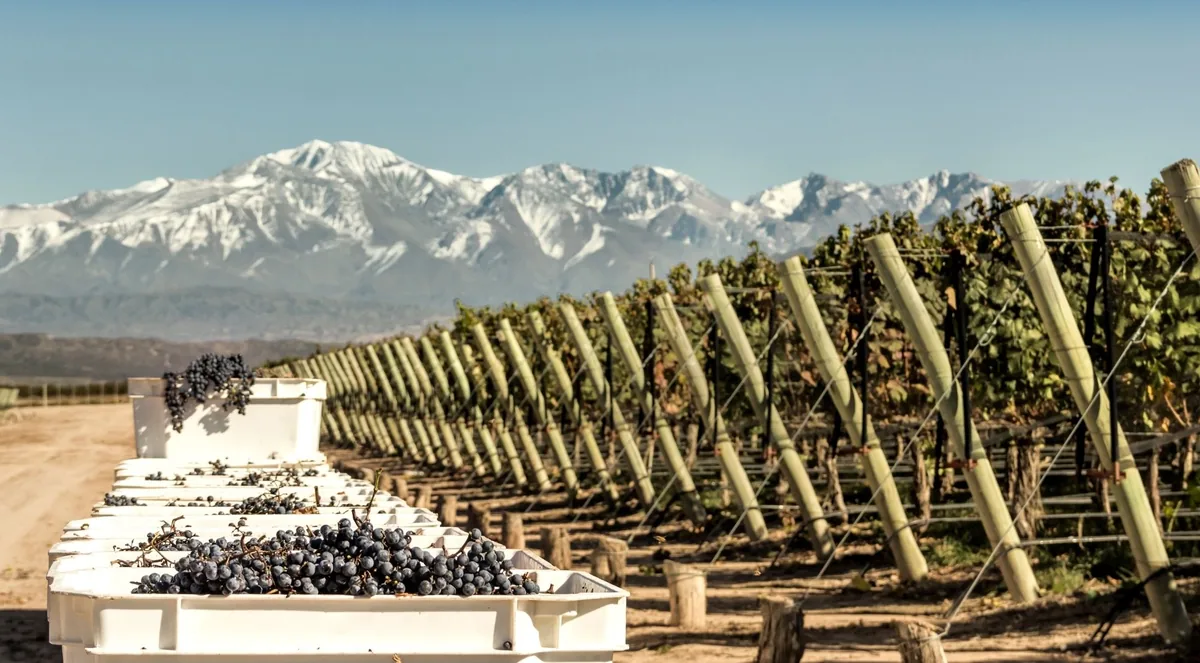
That range is the point. Mendoza is not one place making one recognisable style of Malbec. It is a large, varied wine region where altitude, soil, temperature and winemaking choices pull the same grape in noticeably different directions.
If you are planning tastings here, knowing those differences is what makes the difference between booking a day and booking the right day.
Check Availability
What Is Malbec Wine?
Malbec is a red grape originally associated with France, and with Cahors in the southwest in particular. It later found an exceptionally successful second home in Argentina, where it became the country’s signature red.
Mendoza is the centre of that story. Vineyards spread across dry, sunny land at the foot of the Andes, and many are planted at elevations that would be unusual in most European wine regions.
Strong sunlight, cool nights, low rainfall and well-drained soils together give growers a lot of control over ripening. In higher areas, cooler temperatures help grapes hold their freshness while the intense light still brings them to full flavour maturity.
That balance is one reason Argentine Malbec is so approachable. It can offer generous fruit and a soft texture without feeling heavy.
What Does Malbec Taste Like?
There is no single Malbec flavour profile, but a handful of characteristics come up again and again.
Typical Malbec flavours and aromas include:
- blackberry and black plum
- black cherry and red cherry
- violet and other floral notes
- blueberry
- cocoa or dark chocolate
- black pepper and spice
- dried herbs
- tobacco, vanilla or toast where oak is used
The texture is often as distinctive as the flavour. Many Malbecs have medium to full body, noticeable but rounded tannins, and enough acidity to keep the wine lively.
The old stereotype — a huge, dark, heavily oaked red — no longer describes what Mendoza actually makes. Producers now bottle everything from bright, fresh, floral wines to concentrated bottles built for long ageing.
Is Malbec sweet or dry?
Most Malbec is dry. Ripe fruit flavours can give an impression of sweetness, especially in a rich, full-bodied wine. What you are tasting there is fruit ripeness; the sugar has fermented out.
Is Malbec a heavy wine?
It can be. Warmer sites and riper styles tend to produce broader, richer wines. Higher, cooler vineyards can give Malbec more acidity, more floral character and a leaner structure.
This is exactly why tasting Malbec in Mendoza beats ordering a bottle labelled “Argentinian Malbec” at home. The exact place matters.
Why Is Mendoza Famous for Malbec?
Mendoza combines several conditions that suit the grape unusually well.
The region is dry and sunny, and irrigation traditionally comes from Andean snowmelt. Vineyards are planted across a wide span of elevations, from long-established areas close to Mendoza city up to high sites in the Uco Valley.
Altitude changes the growing conditions substantially. Higher vineyards run cooler, and the gap between daytime and nighttime temperature is larger. Grapes ripen slowly while holding on to their acidity, which is how you get wines with concentration and freshness at the same time.
The Andes also shape the soils. Much of Mendoza’s vineyard land was formed by alluvial material carried down from the mountains, so soil composition can change considerably over surprisingly short distances.
Altitude, climate and varied soils together are why two Mendoza Malbecs grown close to one another can taste strikingly different.
The Three Mendoza Malbec Regions
For visitors, three names come up repeatedly: Luján de Cuyo, the Uco Valley and Maipú. You can taste excellent Malbec in all three, but the day out and the house style are not the same.
If it is the geography you are trying to pin down first, our Mendoza wine region guide covers distances, where to stay and what to drink beyond Malbec, and the three regions compared sets them head to head on price and drive time.
Luján de Cuyo: Classic Mendoza Malbec
Luján de Cuyo is one of Mendoza’s historic growing areas and is often described as the cradle of Argentine Malbec.
It lies south of Mendoza city, which makes it convenient for a day of winery visits. Many well-known producers have vineyards or tasting rooms here, and the area mixes traditional estates with modern wineries and ambitious winery restaurants.
Malbec from Luján de Cuyo tends towards ripe dark fruit, generous texture and polished tannins. Even inside the region the differences matter: Las Compuertas, Agrelo, Perdriel and Vistalba sit at different heights on the alluvial fan and taste it.
For a first wine tour in Mendoza, Luján de Cuyo is an excellent introduction because it offers classic Malbec alongside a broad range of winery styles.
Best for: first-time visitors, classic Mendoza wineries, Malbec-focused tastings and winery lunches.
Our pick: the Luján de Cuyo premium tasting and gourmet lunch names its three estates in advance — Achaval-Ferrer, Pulmary and Finca La Anita — which is unusual at any price and the whole reason to pay $246 instead of $43. It is a small-group day, not a private one, and it carries only 8 reviews at 4.8 — judge it on the estates, because the sample size cannot carry it. (our Luján de Cuyo tours →)
Uco Valley: High-Altitude Malbec and Dramatic Scenery
The Uco Valley sits farther south of Mendoza city and takes in Tupungato, Tunuyán and San Carlos, with subregions including Gualtallary, Los Chacayes and Paraje Altamira.
Many vineyards here are planted at roughly 1,000 metres above sea level or considerably higher. Cooler conditions and large day-night temperature swings can give Malbec vivid aromatics, fresh acidity and fine tannins.
Expect red fruit, violets, herbs, dark berries, and mineral or chalky sensations depending on the site and the winemaking.
The Uco Valley also delivers the Mendoza scenery most travellers picture before they arrive: broad vineyards with the Andes rising sharply behind them. The distance from the city means a visit works best as a full day rather than a quick tasting trip.
Best for: high-altitude wines, premium tastings, modern wineries, mountain scenery and full-day wine experiences.
Our pick: the one-day private Uco Valley wine experience at $375 per group covers a boutique Rhône-style producer, tank samples, a landmark estate and lunch, with photo stops along the way. It is a new listing — 5.0 from 4 reviews — so treat the rating as thin and the itinerary as the reason to book. (our Uco Valley tours →)
Maipú: Traditional Wine Country Close to Mendoza
Maipú is another historic part of Mendoza’s wine landscape, and it is closer to the city than most of the Uco Valley.
The area is known for more than Malbec. It carries a broader traditional wine culture, with long-established bodegas and olive-oil producers alongside the cellars. It suits a relaxed day with several stops and little time on the road.
Maipú Malbec can be generous and fruit-forward, though styles vary widely from winery to winery.
It is also the area most commonly associated with casual bike-and-wine days around Mendoza.
Best for: traditional wineries, shorter transfers, cycling wine tours, and travellers who want to combine wine with other local products.
Our pick: the three-winery Maipú afternoon with an olive oil mill is the most-booked wine tour in the province — $34, 4.7 from 1,372 reviews, nine pours across an artisanal cellar, an industrial one and a sweet-wine bodega, with every entry fee included. (our breakdown →)
On the bikes: the organised cycling days sold here ride Luján de Cuyo and the Potrerillos reservoir rather than Maipú, so the wine and bike tour at the foot of the Andes ($143, 4.9 from 32 reviews) is a different landscape from the one this section describes. Maipú’s bike scene is mostly self-hired and unguided.
Uco Valley Malbec vs Luján de Cuyo Malbec
If you have time for both regions, take it. Comparing them is the quickest way to understand how much Mendoza Malbec can vary.
| Luján de Cuyo | Uco Valley | |
|---|---|---|
| General style | Ripe, rounded, structured | Fresh, aromatic, often more lifted |
| Common fruit character | Black plum, blackberry, dark cherry | Red and dark berries, floral notes |
| Altitude | High by global standards | Often considerably higher |
| Winery feel | Historic estates plus modern producers | Many contemporary destination wineries |
| From Mendoza city | Shorter transfer | Longer transfer |
| Best trip format | Half or full day | Usually full day |
These are broad tendencies, not rules. Vineyard location, vintage, oak treatment, harvest timing and winemaking can all move the final style.
A good guided tasting will often pour contrasting Malbecs deliberately so you can compare them side by side. The semi-private day across Luján de Cuyo and the Uco Valley is built for exactly that — two tastings and a multi-course paired lunch, $130, 4.9 from 136 reviews. (our breakdown →)
Is Argentine Malbec Always From Mendoza?
No. Malbec is grown across several Argentine wine regions, Salta, San Juan and Patagonia among them.
Mendoza is the dominant wine province and the region most international visitors associate with Argentine Malbec. Its scale also gives it enormous stylistic range — inexpensive everyday bottles through to single-vineyard wines and high-end cellar releases.
So when people describe the “typical” taste of Argentine Malbec, they are usually describing Mendoza without realising it.
What Makes a Good Malbec?
There is no single definition of the best Malbec, because style is a preference.
A good Malbec should feel balanced. Ripe fruit should not bury the acidity, tannins should support the wine instead of drying it out, and oak — where it is used at all — should sit behind the fruit.
When you are tasting in Mendoza, pay attention to four things:
- Fruit character. Is it mainly black fruit, red fruit, or a mixture?
- Freshness. Does the wine feel energetic, or broad and warm?
- Tannins. Are they soft, firm, powdery, silky, chalky?
- Finish. Do the flavours disappear quickly, or keep developing after you swallow?
None of this needs technical wine knowledge. Tasting several Malbecs in succession is one of the simplest ways to work out what you actually like.
What to Expect at a Malbec Tasting in Mendoza
Tasting formats vary considerably.
A basic winery visit may be a short tour followed by three or four wines. Premium experiences add vineyard walks, barrel samples, older vintages, single-vineyard wines or food pairings. Winery lunches build several courses around matching wines from the estate.
Malbec will usually lead, but do not ignore the rest of the list. Mendoza also produces excellent Cabernet Sauvignon, Cabernet Franc, Chardonnay, Torrontés, Pinot Noir, Bonarda and red blends; our Mendoza white wine guide covers the whites.
Trying those alongside Malbec tells you more about the region than drinking the same grape at every stop.
How many wineries should you visit in one day?
For most travellers, two or three wineries is enough for a full day, especially with lunch included.
Squeezing in four or five usually means spending more of the day watching the clock than enjoying the wine. Tastings here are rarely small, and Mendoza’s winery lunches are designed to be slow.
Quality beats quantity.
Malbec and Food: What Should You Pair It With?
Malbec’s fruit, tannin and body make it unusually easy to put next to savoury food.
Classic matches include:
- Argentine steak and grilled beef
- asado
- lamb
- beef empanadas
- grilled vegetables
- mushrooms
- hard and semi-hard cheeses
- dishes with smoky or peppery flavours
A fresher, high-altitude Malbec will also handle lighter dishes than people expect, especially where the wine has bright acidity and moderate oak.
If food matters on your trip, book at least one winery lunch. The good ones are not restaurants that happen to sit beside vineyards: the menu is built around the estate’s wines, which makes the whole tasting easier to follow. Our wine tours with lunch page lists the options with what each meal actually includes.
How to Choose a Malbec Wine Tour in Mendoza
The best tour depends less on how many wineries are included than on what kind of day you want.
Choose Luján de Cuyo if…
You want a classic introduction to Mendoza wine, short driving times and a mix of historic and modern wineries. The half-day tour with enologist guides ($43, 4.3 from 743 reviews) covers two or three cellars in Luján de Cuyo or Maipú and is the cheapest way into the appellation. (our breakdown →)
Choose the Uco Valley if…
You care about scenery, high-altitude wine and premium producers, and you are happy to give the experience a full day.
Choose Maipú if…
You want traditional wineries, easy logistics or a more casual wine day.
Choose a private tour if…
You already know what you like, want specific wineries, or would rather spend longer at fewer estates. Private days here are priced per group, so for two or three people they often undercut a shared full-day tour — private wine tours sets out the arithmetic.
Choose a small-group tour if…
You want the logistics handled without paying private-tour prices. For most first-time visitors this is the simplest option, and the full-day tour with a three-course lunch ($125, 4.4 from 167 reviews) lets you pick Luján de Cuyo, Maipú or the Valle de Uco when you book. (our breakdown →)
One practical point outranks all of this: do not plan to drive yourself if you intend to drink at several tastings. The winery areas are spread out, and a tour or a hired driver is what lets everyone in the group take part properly.
When Is the Best Time to Taste Malbec in Mendoza?
Mendoza works year-round, though the character of a visit shifts with the season.
February to April is harvest, when the vineyards are working and Mendoza’s wine culture is at its most visible. It is also a popular period, so the sought-after tastings and winery restaurants book out.
September to November brings green vineyards and generally pleasant touring conditions.
Winter is quieter and can be excellent for intimate tastings, though the vines are dormant and some outdoor experiences close.
There is no reason to wait for harvest just to drink good Malbec. Cellar tastings run all year, and our best time to visit guide goes month by month.
Is Mendoza Malbec Worth Seeking Out If You Already Drink Malbec at Home?
Yes, and the reason is not simply another bottle of Malbec.
In Mendoza you can taste wines from neighbouring regions side by side, see the vineyards and soils behind them, and work out for yourself why a high-altitude Uco Valley wine feels different from one grown closer to the city.
That context changes the experience.
If you currently think of Malbec as one reliable style of dark, fruity red, a few well-chosen tastings here will complicate the idea in a good way.
Frequently Asked Questions About Malbec Wine
Is Malbec from Argentina or France?
Malbec originated in France, but Argentina, and Mendoza in particular, has become the grape’s best-known modern home. It is still grown in France, most notably in Cahors.
What does Argentine Malbec taste like?
Common flavours include plum, blackberry, cherry and violet, sometimes with spice, cocoa, herbs or vanilla. The exact profile depends strongly on vineyard location and winemaking.
Is Malbec dry?
Yes. Most Argentine Malbec is made as a dry red wine, even when ripe fruit makes it taste rich or sweet-fruited.
Is Malbec full-bodied?
Many examples are medium to full-bodied, but cooler high-altitude wines can feel fresher and more restrained.
Where is the best Malbec in Mendoza?
There is no single best area. Luján de Cuyo is famous for classic, established Malbec styles, the Uco Valley for high-altitude vineyards and increasingly site-specific wines. Maipú also has a long Malbec tradition and excellent producers.
Is Uco Valley worth visiting for Malbec?
Yes. It is one of Mendoza’s most important wine areas, particularly if you want to explore high-altitude vineyards and compare fresher, more aromatic styles of Malbec.
Should I book Mendoza wineries in advance?
Yes. Many wineries receive visitors by reservation only, and the most popular tours and winery lunches fill well ahead during busy periods.
Final Thoughts
Malbec may be the easiest way into Mendoza wine, but it should not be treated as a single style.
Taste it in Luján de Cuyo and you may find ripe dark fruit and a broad, polished texture. Head south into the Uco Valley and the same grape turns more floral, fresher and more precise. Visit several producers and the differences sharpen further.
That is what makes Malbec rewarding here. You are not simply tasting Argentina’s most famous grape. You are tasting how far place can move it.
If your trip allows, choose wineries in at least two different areas instead of several properties in one zone. The contrast will tell you more about Mendoza, and it will probably settle which style of Malbec you actually like best.
Nine Tastings, Three Bodegas, One Afternoon
Join 1,300+ guests who rated our top pick 4.7/5. Three Maipú wineries and an olive oil mill, every tasting and entry fee included, hotel pickup, and a driver for the road back. Free cancellation.
Check Availability & Book