The Mendoza Wine Region, Explained
How Mendoza's wine country is organised: Luján de Cuyo, Maipú and the Uco Valley, what each is known for, how far they are, where to stay and what to drink.
Mendoza is Argentina’s most famous wine region and one of the best places in South America for a wine-focused trip. The province makes the majority of the country’s wine, but for a visitor the appeal has little to do with production figures. Mendoza puts high-altitude vineyards, Andes views, serious food and a wide span of winery experiences inside an hour or two of one city.
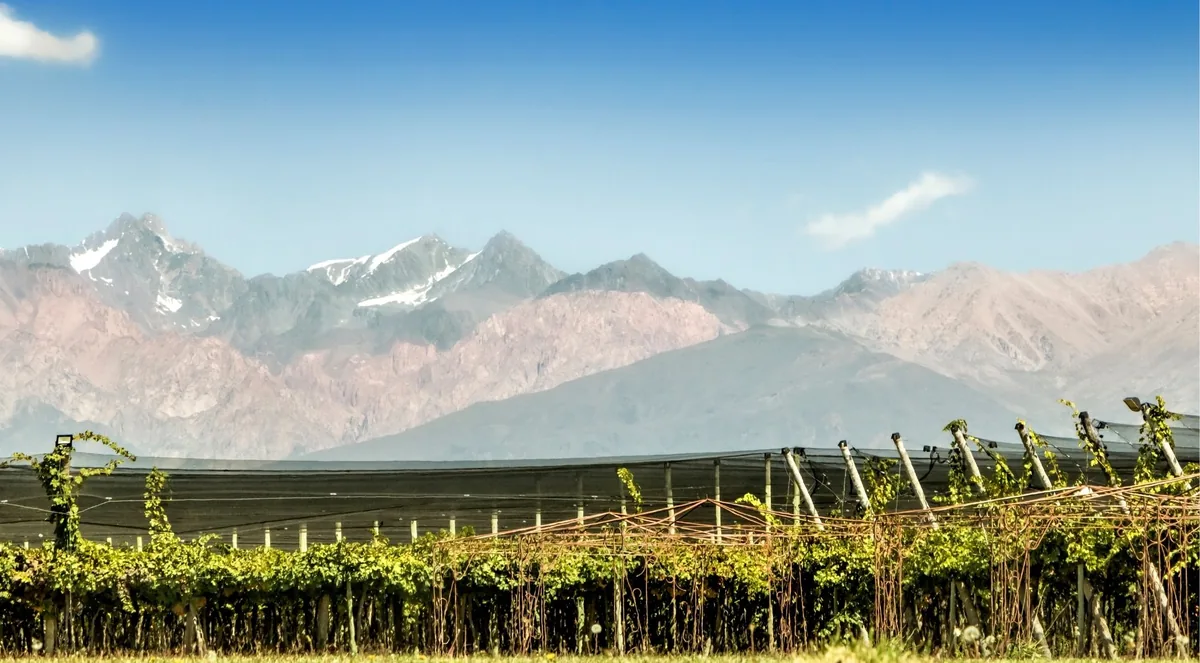
What makes planning it confusing is that the “Mendoza wine region” is not one compact area. The main zones are spread across several valleys and districts, and each has a different character.
For a first visit, four names do most of the work:
- Luján de Cuyo
- Maipú
- Uco Valley
- Mendoza city, which is the base most tours run from
This guide covers how the region is organised, what each area is known for, how far they are from the city, and which part of Mendoza suits which kind of trip.
Check Availability
Where Is the Mendoza Wine Region?
Mendoza sits in western Argentina, close to the Chilean border and directly east of the Andes.
The growing areas stretch across a large section of the province; they do not cluster around one town. Mendoza city lies north of the main vineyard zones and works as the transport and tourism hub.
Most wine visitors stay in or near the city and travel out to the vineyards during the day. Some choose accommodation in Luján de Cuyo or the Uco Valley for a quieter, more immersive wine-country stay.
The vineyards benefit from a dry continental climate, strong sunshine, low rainfall, and a large gap between daytime and nighttime temperatures.
Altitude is the defining characteristic of Mendoza wine. Many vineyards sit hundreds of metres above sea level and a good number above 1,000. Higher elevations mean cooler nights, slower ripening, and fresh acidity holding on in a sunny, relatively warm climate.
Why Mendoza Is Famous for Wine
Mendoza is bound up with Malbec, Argentina’s flagship red grape.
Malbec came from France, but it found conditions here that suited it particularly well, producing deeply coloured, aromatic wines. Today you can taste it in many styles, from soft and fruit-forward to structured, mineral and age-worthy — our Malbec guide covers what changes between them and why.
Mendoza is not only about Malbec, though. Wineries here also produce:
- Cabernet Sauvignon
- Cabernet Franc
- Bonarda
- Syrah
- Merlot
- Pinot Noir
- Chardonnay
- Sauvignon Blanc
- Torrontés
- sparkling wine
Altitude, sunshine, irrigation from Andean snowmelt and real differences between individual vineyard areas add up to considerable variation. It is why two Malbecs from different parts of Mendoza can taste noticeably unalike.
Luján de Cuyo
Luján de Cuyo is one of the classic names in Mendoza wine.
It lies south of Mendoza city and is often described as one of the historic homes of premium Argentine Malbec. The area takes in several well-known wine districts:
- Agrelo
- Perdriel
- Vistalba
- Las Compuertas
- Ugarteche
Luján de Cuyo is convenient for visitors because it is relatively close to the city while still giving you a genuine vineyard landscape.
What is Luján de Cuyo known for?
Luján de Cuyo is particularly associated with:
- Malbec
- Cabernet Sauvignon
- established wineries
- historic vineyards
- premium tasting experiences
- winery restaurants
Many wineries here combine traditional architecture with modern tasting rooms and high-end gastronomy.
Who should visit Luján de Cuyo?
Luján de Cuyo is a strong choice if you:
- are visiting Mendoza for the first time
- want famous wineries without travelling too far
- enjoy premium Malbec
- want a winery lunch
- prefer a full-day wine experience with several stops
It is also one of the easiest regions to build a private or small-group tour around.
Our pick: the Luján de Cuyo premium tastings and gourmet lunch names its estates up front — Achaval-Ferrer, the family-run Pulmary and Finca La Anita — instead of drawing from a rotating pool. $246, 4.8 from 8 reviews, so the rating is thin and the itinerary is the reason to book. (all our Luján de Cuyo tours →)
Maipú
Maipú is the other historic wine area close to Mendoza city.
It has a long winemaking tradition and is generally easier to reach than the Uco Valley. It also feels more relaxed and more traditional than some of the polished experiences in newer parts of the province.
What is Maipú known for?
The area is known for:
- historic wineries
- traditional wine production
- olive oil estates
- Malbec
- Bonarda
- accessible winery visits
Maipú is also the part of Mendoza most associated with bike wine tours. Several routes let you cycle between wineries and tasting stops, though organised transport is the safer and more comfortable option if you plan to taste extensively. Worth knowing before you book: the guided cycling days sold here ride Luján de Cuyo and the Potrerillos reservoir rather than Maipú — the wine and bike tour at the foot of the Andes ($143, 4.9 from 32 reviews) is the best-reviewed of them. Maipú’s own bike scene is mostly self-hired and unguided.
Who should visit Maipú?
Maipú suits travellers who:
- want a relatively easy day trip from the city
- enjoy traditional wineries
- want a more casual wine experience
- are interested in olive oil as well as wine
- want to try a bike-based wine day
It also works well on a short trip.
Our pick: the three-winery Maipú afternoon with an olive oil mill is the most-booked wine tour in the province — $34, 4.7 from 1,372 reviews, nine pours across an artisanal cellar, an industrial one and a sweet-wine bodega, every entry fee included. (our breakdown →)
Uco Valley
The Uco Valley is Mendoza’s most visually striking wine region.
It lies farther south of the city than Luján de Cuyo or Maipú, but most visitors count the extra travel as worth it. The valley sits closer to the Andes and holds some of the province’s highest vineyards.
Important wine areas within it include:
- Tupungato
- Tunuyán
- San Carlos
- Gualtallary
- Los Chacayes
- Paraje Altamira
What is the Uco Valley known for?
The Uco Valley is especially associated with:
- high-altitude vineyards
- mountain scenery
- premium Malbec
- Cabernet Franc
- Chardonnay
- modern wineries
- destination winery restaurants
Many estates here have dramatic contemporary architecture built around the Andes views, and the valley has become a favourite for scenic, gastronomy-focused wine days.
Who should visit the Uco Valley?
Choose the Uco Valley if you:
- want spectacular scenery
- are particularly interested in terroir and altitude
- want premium winery experiences
- enjoy long winery lunches
- are happy to spend more time travelling
- are considering a private or luxury wine tour
The distance makes it a full-day excursion. Our Uco Valley wine guide covers its subregions, the wineries to pair and a sample day.
Our pick: the one-day private Uco Valley wine experience covers a boutique Rhône-style producer, tank samples, a landmark estate and lunch, at $375 per group. It is newly listed — 5.0 from 4 reviews — so read the itinerary rather than the rating. (all our Uco Valley tours →)
Luján de Cuyo vs Maipú vs Uco Valley
With time for only one region, the choice comes down to the kind of day you want.
| Region | Best for | Travel effort | Typical feel |
|---|---|---|---|
| Luján de Cuyo | First-time visitors, classic Malbec, winery lunches | Moderate | Established and polished |
| Maipú | Traditional wineries, bike tours, olive oil | Lower | Casual and historic |
| Uco Valley | Scenery, premium wines, gastronomy | Higher | Modern and dramatic |
For a first trip, Luján de Cuyo is usually the easiest all-round choice. For the strongest mountain scenery, the Uco Valley. For a relaxed, accessible day, Maipú.
Our three regions compared guide takes the same decision further, with drive times, altitudes and what each district’s wine actually tastes like.
What Is the Best Wine Region in Mendoza?
There is no single best region for everyone. Each zone answers a different question.
Best for first-time visitors: Luján de Cuyo
It combines convenience, famous wineries, excellent Malbec and strong restaurant options.
Best for scenery: Uco Valley
The Andes feel much closer here, and many winery views are exceptional.
Best for a relaxed day: Maipú
Easier to reach, and it works particularly well for casual tastings and bike tours.
Best for premium wine: Uco Valley or Luján de Cuyo
Both have outstanding producers, though the style of the experience differs.
Best for food and wine: Uco Valley
The valley has become known for destination winery restaurants and long tasting menus.
Mendoza Vineyards and Altitude
Altitude is among the most important factors in Mendoza wine.
Vineyards are often planted between roughly 600 and more than 1,500 metres above sea level, depending on the area.
Higher elevation generally brings:
- stronger sunlight
- cooler nights
- slower ripening
- better retention of acidity
- thicker grape skins in some varieties
The effect is not simply “higher is better.” Soil, exposure, irrigation, grape variety, vineyard management and winemaking all matter. But altitude is what explains how Mendoza produces ripe wines that still hold their freshness.
How Mendoza’s Wine Areas Affect Malbec
Malbec changes noticeably depending on where it grows.
In warmer, lower-altitude areas, Malbec tends to be:
- rounder
- riper
- softer
- more fruit-driven
At higher elevations it can become:
- fresher
- more floral
- more structured
- more mineral
- slightly more restrained
This is what makes a Mendoza tasting trip interesting. Instead of simply drinking several Malbecs, you get to compare how one grape behaves across different valleys and elevations.
How Many Wine Regions Should You Visit?
On a short trip, trying to cover every wine area makes the itinerary feel rushed. A more realistic approach:
One wine day
Choose one of:
- Luján de Cuyo
- Maipú
- Uco Valley
Two wine days
A strong combination:
- Luján de Cuyo
- Uco Valley
That gives you the contrast between a classic Mendoza wine region and a high-altitude, modern wine landscape.
Three wine days
You can comfortably cover:
- Maipú
- Luján de Cuyo
- Uco Valley
This is the broadest overview of Mendoza wine country.
Should You Stay in Mendoza City or Wine Country?
Staying in Mendoza city
The easiest option for most travellers. It gives you:
- more hotels
- more restaurants
- easier evening dining
- simple pickup for wine tours
- better access to transport
It is particularly convenient if you plan to visit several different wine regions.
Staying in Luján de Cuyo
This works if you want:
- quieter surroundings
- easier access to nearby wineries
- a boutique wine-country atmosphere
Staying in the Uco Valley
Best for travellers who want:
- a slower trip
- vineyard accommodation
- mountain views
- winery restaurants
- less daily driving
The trade-off is distance from Mendoza city.
Do You Need a Car to Visit Mendoza Wineries?
Not necessarily. Many visitors prefer not to drive, for the obvious reason.
Common options include:
- small-group wine tours
- private wine tours
- hired driver
- taxi or transfer
- bike tour in suitable areas
Organised tours are particularly useful in the Uco Valley, where the wineries are spread out and the distances are longer. For a shared day with the logistics handled, the full-day tour with a three-course lunch ($125, 4.4 from 167 reviews) lets you choose Luján de Cuyo, Maipú or the Valle de Uco at the point of booking. (our breakdown →) Private days are priced per group here, so for two or three people they often cost less per head than a shared tour — see private wine tours. If you want the driver without the guiding, the private transfer to three Valle de Uco wineries does exactly that for $90 per group, though it is a new listing with only 3 reviews.
Reservations matter too. Many Mendoza wineries do not work like casual walk-in tasting rooms; tastings and lunches are scheduled in advance.
How Far Are the Wine Regions from Mendoza City?
Travel times vary with the winery and the traffic, but as a general guide:
- Maipú: roughly 20–40 minutes
- Luján de Cuyo: roughly 30–50 minutes
- Uco Valley: often around 1.5–2 hours
The Uco Valley therefore takes far more travel time. When you compare tours, look at how many winery stops are included against how much of the day goes on the road.
When Is the Best Time to Visit Mendoza Wine Country?
Mendoza can be visited year-round, but the experience changes with the seasons.
February to March
Harvest season. The vineyards are active, grapes are being picked, and Mendoza’s wine culture is at its most visible. It is also one of the busiest periods.
April to May
Autumn colour appears in the vineyards, temperatures turn mild, and the region is at its most photogenic.
June to August
Winter is cooler and generally quieter. The vines are dormant, but winery tastings and lunches still run, and the snow-covered Andes views can be spectacular.
September to November
Spring brings warmer weather and new vineyard growth — an excellent time for outdoor winery lunches.
December to January
Summer is hot and sunny. Tours stay popular, but afternoon temperatures can be intense.
Our best time to visit guide goes through the same calendar in more detail, including the Vendimia harvest festival week.
Is Mendoza Wine Country Worth Visiting If You Are Not a Wine Expert?
Absolutely. You do not need detailed wine knowledge to enjoy Mendoza, and many tastings are designed for visitors who simply want the basics.
Winery guides commonly explain:
- grape varieties
- vineyard altitude
- fermentation
- ageing
- tasting technique
- food pairing
The setting is a large part of the experience too. Travellers with only a casual interest in wine still tend to enjoy the vineyards, the architecture, the mountain scenery and the food.
What Wines Should You Try in Mendoza?
Malbec is the obvious starting point. Do not stop there. The grapes below are the short list; our guide to the best Argentinian wines to try in Mendoza goes through each one, with what it tastes like and where it grows.
Cabernet Franc
Increasingly important in Mendoza, especially in the higher-altitude areas.
Cabernet Sauvignon
Long established here, and often blended with Malbec.
Bonarda
One of Argentina’s important red grapes, and the one to try if you want something beyond Malbec.
Chardonnay
Particularly interesting from cooler, higher-elevation vineyards.
Torrontés
Argentina’s distinctive aromatic white, though it is more closely associated with northern regions such as Salta.
Sparkling wine
Several Mendoza producers make excellent traditional-method sparkling wines.
Wine Tasting in Mendoza: What to Expect
A typical winery visit may include:
- A short vineyard or cellar tour
- An explanation of the winery’s production
- A guided tasting
- Optional food pairings
- Time to buy wine
A full-day tour usually combines several wineries. Some premium itineraries run two tastings followed by a long winery lunch instead of packing in as many estates as possible — often the better day. The semi-private day across Luján de Cuyo and the Uco Valley is built that way: two tastings, then a multi-course lunch with paired wines, $130, 4.9 from 136 reviews. (our breakdown →) Our wine tours with lunch page compares the rest.
How to Choose Which Mendoza Wine Area to Visit
Before booking, ask yourself:
How much travel time are you comfortable with?
Choose Maipú or Luján de Cuyo for less driving. Choose the Uco Valley if scenery and high-altitude wine justify a longer day.
Are you more interested in wine or the overall experience?
Serious enthusiasts may want specific producers or subregions. Casual visitors may care more about scenery, food and atmosphere.
Do you want a winery lunch?
If yes, both Luján de Cuyo and the Uco Valley have excellent choices.
Do you want to cycle?
Maipú is the most established area for bike wine days, though the guided cycling tours sold here run in Luján de Cuyo.
Is this your first time in Mendoza?
Luján de Cuyo is usually the safest all-round introduction. If you would rather work from budget and format than from geography, our which Mendoza wine tour is right for you guide starts from the other end.
Frequently Asked Questions
What is the main wine region in Mendoza?
Mendoza is not one wine district but several major wine areas. Luján de Cuyo, Maipú and the Uco Valley are the three most important for visitors.
What wine is Mendoza most famous for?
Malbec is Mendoza’s signature wine and the grape most strongly associated with Argentina internationally.
Is the Uco Valley part of Mendoza?
Yes. The Uco Valley is in Mendoza Province, south of Mendoza city.
Which is better, Maipú or Luján de Cuyo?
Luján de Cuyo generally suits visitors looking for premium Malbec and polished winery experiences. Maipú can be better for traditional wineries, bike tours and a more casual day.
How many days do you need for Mendoza wine country?
Two or three wine days give a good overview. With only one day, choose one region instead of trying to cover several.
Can you visit Mendoza wineries without a tour?
Yes, but advance reservations are often required and transport has to be planned carefully. Many visitors find organised tours or private drivers more convenient.
Is Uco Valley worth the drive?
For many travellers, yes. It offers some of Mendoza’s most dramatic mountain scenery, high-altitude vineyards, modern wineries and excellent winery restaurants.
Final Thoughts
The Mendoza wine region is best understood as a collection of distinct wine areas rather than one destination.
Luján de Cuyo is the classic introduction, and it is particularly strong for Malbec and winery lunches.
Maipú is convenient, historic, and ideal for a relaxed wine day or a bike tour.
Uco Valley asks for more travel and repays it with dramatic scenery, high-altitude vineyards, premium wines and some of Mendoza’s most memorable winery experiences.
With enough time, visiting more than one region is worthwhile, because the differences are a large part of what makes Mendoza interesting. For a first trip, Luján de Cuyo and the Uco Valley together give an excellent overview of the province.
Nine Tastings, Three Bodegas, One Afternoon
Join 1,300+ guests who rated our top pick 4.7/5. Three Maipú wineries and an olive oil mill, every tasting and entry fee included, hotel pickup, and a driver for the road back. Free cancellation.
Check Availability & Book