The Uco Valley Wine Guide
Tupungato, Gualtallary, Los Chacayes and Paraje Altamira: which Uco Valley wineries to visit, how many fit in a day, and whether to stay in the valley or in Mendoza.
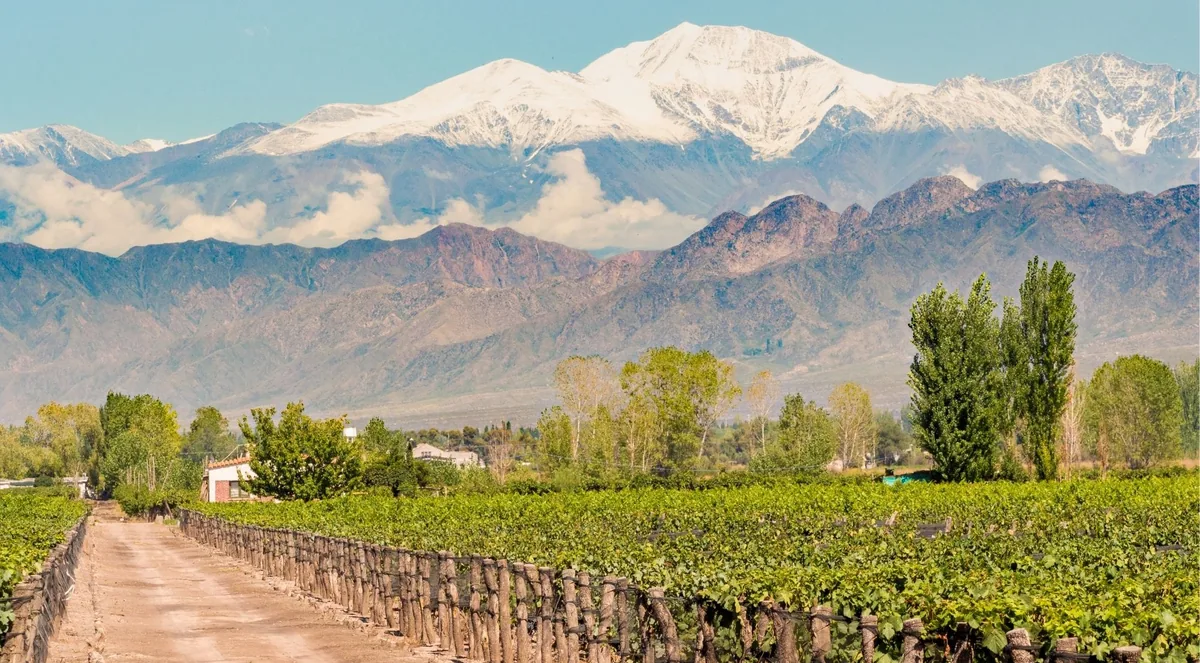
The Uco Valley is the part of Mendoza many travellers picture before they arrive: vineyards stretching toward the Andes, snow on the peaks behind them, modern wineries built into the landscape, and long lunches paired with high-altitude Malbec.
It is also one of the easiest places to misunderstand when planning a trip.
“Uco Valley” is not one compact winery district. It is a large wine-growing area south of Mendoza city, covering Tupungato, Tunuyán and San Carlos, with vineyards spread across different elevations, soils and subregions. That spread is what makes the valley interesting.
It is famous for Malbec, and increasingly for Cabernet Franc, Chardonnay, Pinot Noir and other varieties that do well in cooler, higher sites.
For visitors, the main questions are usually practical:
- Is the Uco Valley worth the drive from Mendoza?
- Which wineries should you prioritise?
- What is the difference between Gualtallary and Paraje Altamira?
- Should you book a tour or stay in the valley?
- How many wineries can you realistically visit in one day?
- Is the Uco Valley better than Luján de Cuyo?
This guide answers each of them, and helps you plan a wine day that feels relaxed instead of rushed. Winery reservations in the valley fill ahead, so if you already know your date, check it below first.
Check Availability
Quick Guide to the Uco Valley
| Question | Short answer |
|---|---|
| Where is it? | South of Mendoza city |
| Main departments | Tupungato, Tunuyán and San Carlos |
| Typical vineyard altitude | Roughly 900 to 1,600 metres, with a few plots higher |
| Most famous grape | Malbec |
| Other important varieties | Cabernet Franc, Chardonnay, Pinot Noir, Cabernet Sauvignon |
| Best for | Scenery, premium wineries, high-altitude wine, winery lunches |
| Ideal visit length | A full day from Mendoza; 2–3 nights if staying in the valley |
| Best transport | Organised tour, private driver, or a rental car if the driver is not drinking |
| Main downside | More driving than Maipú or Luján de Cuyo |
For most visitors, the Uco Valley works best as a full-day wine trip. It does not fit into a half-day itinerary.
Where Is the Uco Valley?
The Uco Valley lies south of Mendoza city and stretches across three departments:
- Tupungato
- Tunuyán
- San Carlos
The valley sits closer to the Andes than Mendoza city, and many of its vineyards are planted well above the traditional wine zones nearer the provincial capital.
The drive depends on the winery. Many of the popular estates are roughly 80 to 130 km south of the city, which works out at about ninety minutes to the nearer cellars and up to two hours each way to the farthest.
That distance is why a Uco Valley wine tour is longer and more expensive than a Maipú or Luján de Cuyo one. Part of the price pays for the tastings and part pays for the road. Our three regions compared sets the drive times and prices side by side.
Why Is the Uco Valley Famous for Wine?
The valley combines several conditions that suit premium wine:
- high altitude
- intense sunlight
- cool nights
- a dry climate
- large temperature differences between day and night
- stony, well-drained soils in many areas
- irrigation supplied by Andean snowmelt
The result is often ripe fruit that keeps its freshness.
That balance is one reason the Uco Valley has become so important in modern Argentine wine. It is especially associated with wines that feel more precise and fresh than the stereotype of big, heavy Malbec.
What Does Uco Valley Malbec Taste Like?
There is no single Uco Valley Malbec style. That is the most important thing to understand before you taste.
At higher elevations and in cooler sites, Malbec may show:
- violet and floral notes
- black cherry
- plum
- fresh blackberry
- spice
- chalky or mineral sensations
- firmer acidity
- more defined tannins
Some wines are rich and powerful. Others are fresh, restrained and elegant.
Soil and altitude vary considerably across the valley, which is why two Malbecs grown fairly close to each other can taste very different.
If Malbec is the reason you are here, one of the best things to do in the Uco Valley is compare wines from several subregions instead of tasting several bottles labelled only “Mendoza”. Our Malbec guide covers how the grape changes between Luján de Cuyo and the valley.
The Main Uco Valley Wine Areas
Tupungato
Tupungato is the northern part of the Uco Valley and one of its most important wine areas. It holds some of the valley’s highest vineyards and several well-known wine zones, Gualtallary among them.
The area is known for:
- high-altitude Malbec
- Cabernet Franc
- Chardonnay
- cool-climate styles
- strong mountain views
Tupungato suits travellers who care about terroir and premium wine more than about ticking off large famous wineries.
Gualtallary
Gualtallary has become one of the most talked-about names in Argentine wine.
It sits within Tupungato at high elevation, on stony, calcium-rich soils. Its wines are often described as fresh, structured and mineral.
Important varieties include:
- Malbec
- Cabernet Franc
- Chardonnay
Gualtallary is the place to understand why modern Mendoza producers talk about vineyard origin and soil as much as grape variety.
Wineries and producers associated with the area include Andeluna, Domaine Bousquet, Catena’s Adrianna Vineyard and several smaller projects.
Tunuyán
Tunuyán sits in the centre of the Uco Valley and has become one of its main wine-tourism hubs, with many wineries open to visitors.
It includes Los Chacayes, one of the valley’s best-known wine zones, and it is a convenient base if you want to combine wineries with countryside accommodation.
Los Chacayes
Los Chacayes lies in western Tunuyán, closer to the Andes. It has a strong reputation for premium red wines, particularly:
- Malbec
- Cabernet Franc
- blends
Elevation, rocky soils and cool nights together can give wines with good concentration and freshness.
It is also one of the most scenic parts of the valley. If your ideal Mendoza day involves mountain landscapes and smaller premium wineries, put Los Chacayes on the shortlist.
San Carlos
San Carlos forms the southern part of the Uco Valley. It includes one of Mendoza’s most important modern wine areas, Paraje Altamira.
The department has a long agricultural history and has drawn growing attention for site-specific premium wine.
Paraje Altamira
Paraje Altamira is one of the strongest names to know if you are interested in terroir-driven Malbec.
The area is known for stony alluvial soils, often with significant calcium carbonate. Malbec from here can combine ripe fruit with fresh acidity, structure and a distinctive chalky or mineral character.
It is home territory for some highly regarded modern producers, including Zuccardi’s Piedra Infinita project. For serious wine enthusiasts, Paraje Altamira can be one of the most rewarding parts of the valley to explore.
Best Wineries to Visit in the Uco Valley
There is no definitive list, because the best winery depends on what you want from the day. Some estates stand out for the wine; others for architecture, food, art or landscape.
The following are useful starting points. For estates across all three of Mendoza’s regions, and which of them take visitors, see the best wineries in Mendoza.
Zuccardi Valle de Uco
Best for: terroir, architecture, premium wine, winery lunch
Zuccardi’s Piedra Infinita winery in Paraje Altamira is one of the strongest choices for visitors who want to understand modern Uco Valley wine.
The building is closely tied to its landscape. Local stone is central to the architecture, and tastings focus on vineyard origin, soil and altitude. This is a good place to move past the idea that “Malbec is Malbec”: depending on the tasting, you may compare wines from different vineyard sites and see how much the valley changes over short distances.
Why visit? Choose Zuccardi if:
- wine quality is your top priority
- you want to learn about terroir
- you enjoy architecture
- you want a premium lunch
- this may be your only Uco Valley day
Best for: serious wine lovers, and first-time Uco Valley visitors who want one flagship experience.
Our pick: the private Zuccardi day with lunch drives you to Piedra Infinita in a private car, walks the single-parcel vineyards and seats you for a paired tasting menu of four to nine courses at $450 per person. It has only 2 reviews, averaging 4.5, so judge it on the estate and the itinerary.
Bodega Salentein
Best for: art, architecture, scenery, broad visitor appeal
Salentein is one of the valley’s most established wine-tourism destinations. It combines wine with:
- striking architecture
- a memorable barrel cellar
- art
- mountain scenery
- restaurant experiences
That mix helps when not everyone in your group wants a technical tasting. It feels like a destination as much as a tasting room.
Why visit? Choose Salentein if:
- you enjoy art and design
- you want a polished visitor experience
- you are visiting the Uco Valley for the first time
- scenery matters
- you are travelling with people who have mixed interests
Best for: first-time visitors, and travellers who want wine plus culture and architecture.
Our pick: the full-day tour with a three-course lunch lets you choose the Valle de Uco when you book, and one of its lunch options is a picnic in the vineyards at Salentein ($125 per person, 4.4 from 167 reviews). (our breakdown →)
Domaine Bousquet
Best for: organic wine, Gualtallary, food, sustainability
Domaine Bousquet is in Tupungato and is particularly associated with organic and biodynamic wine. It runs visitor experiences and has a restaurant, so tasting and lunch can happen in one stop. Its location also makes it a useful introduction to the high-altitude wines of Gualtallary.
Why visit? Choose Domaine Bousquet if:
- organic wine interests you
- you want a Gualtallary tasting
- you value sustainability
- you want lunch as part of the experience
- you prefer a full winery destination to a quick tasting
Best for: travellers interested in organic wine and a relaxed food-and-wine experience.
Our pick: the semi-private day with tastings and a paired lunch draws its Uco Valley wineries from a list that includes Domaine Bousquet and Andeluna, with tastings, a multi-course lunch and winery reservations in the price ($130 per person, 4.9 from 136 reviews). Which two estates you get depends on availability when you book. (our breakdown →)
Andeluna
Best for: Gualtallary, mountain setting, high-altitude wine
Andeluna is in Gualtallary, Tupungato, at the foot of the Andes. It is closely associated with high-altitude wines and has a particularly attractive mountain setting, and it fits naturally into a Tupungato-focused itinerary. It is one of the Uco Valley wineries with the best views.
Why visit? Choose Andeluna if:
- you want to explore Gualtallary
- mountain views matter
- you are interested in high-altitude wine
- you want a winery with a strong sense of place
Best for: visitors building a premium Tupungato or Gualtallary wine day.
Catena Zapata’s Adrianna Vineyard
The Adrianna Vineyard in Gualtallary is one of the most famous high-altitude vineyard sites in Argentina. It belongs to Catena Zapata and has played an important part in the international reputation of high-altitude Mendoza wine.
It is particularly significant for:
- Malbec
- Chardonnay
- terroir-focused research
Access and visitor formats are more limited than at conventional tourist wineries, so do not expect a casual drop-in tasting room. The name is still one to know even if your itinerary does not include a visit.
Which Uco Valley Wineries Should You Combine?
Geography matters. Do not choose wineries only because they appear on a “best wineries” list: a good wine day keeps the travel between stops manageable.
Tupungato / Gualtallary day
A possible structure:
- a morning tasting at one high-altitude producer
- a second winery in the same area
- a long winery lunch
This works well with wineries such as:
- Domaine Bousquet
- Andeluna
- Salentein
- other nearby producers, depending on reservations
Tunuyán / Los Chacayes day
Focus on smaller premium producers and the scenery. This suits a private tour, because winery availability and distances vary.
Paraje Altamira / San Carlos day
Build the day around a terroir-focused winery such as Zuccardi and pair it with another nearby estate. Do not try to cross the whole valley.
How Many Wineries Should You Visit in One Day?
In the Uco Valley, two or three wineries is enough.
You are already spending a good part of the day on the road from Mendoza, so four or five full tastings will make the day feel rushed.
A strong itinerary might look like one of these.
Option 1: Two tastings + lunch
- a morning tasting
- a second tasting
- a long winery lunch
Option 2: Three wineries
- a morning winery
- a pre-lunch winery
- a final winery with lunch or a food pairing
Option 3: One flagship winery + one boutique winery + lunch
This can be the most interesting format, because the two stops contrast.
Counting winery visits is the wrong goal here. Take the time to understand each site.
Uco Valley Wine Tours from Mendoza
The simplest way to visit is an organised wine tour from Mendoza city. Tours typically include:
- pickup from central accommodation
- transport
- two or three wineries
- guided tastings
- lunch, on many full-day tours
- the return to Mendoza
Some focus on well-known wineries; others deliberately choose smaller producers. Premium tours may add reserve tastings and more elaborate winery lunches.
Three formats cover most of what is on offer:
- Shared full day: the full-day tour with a three-course lunch ($125, 4.4 from 167 reviews), where you choose the Valle de Uco at booking.
- Semi-private: the semi-private wineries and lunch day ($130, 4.9 from 136 reviews), with your own guide-driver and no shared pickup loop.
- Private with a sommelier: the one-day private Uco Valley wine experience ($375 per group of up to four, 5.0 from 4 reviews), where winery fees and lunch are paid on the day.
Every Uco Valley option we cover, with what each price includes, is on our Uco Valley wine tours page.
Group vs Private Uco Valley Tours
Small-group tours
Best for:
- first-time visitors
- couples
- solo travellers
- people who want good value
- travellers without specific winery preferences
Advantages:
- lower cost than private
- transport handled for you
- a social atmosphere
- easy booking
Disadvantages:
- a fixed itinerary
- less control over which wineries you visit
- pickup can take longer
Private tours
Best for:
- serious wine lovers
- families or small groups
- travellers with specific wineries in mind
- special occasions
- people who want a slower pace
Advantages:
- your own choice of wineries
- more flexibility
- easier to focus on one subregion
- more control over lunch and timing
Disadvantages:
- more expensive
- popular wineries still need advance reservations
With four or more people in your group, the per-person gap between a premium shared tour and a private one can be smaller than you expect. The private Uco day above is priced per group of up to four, which is under $94 each for a full car before winery fees and lunch, against $130 each on the semi-private day with both included. Our private wine tours page sets out the arithmetic for each group size.
Is It Better to Stay in the Uco Valley?
For a single wine day, staying in Mendoza city is perfectly practical. For two or more Uco Valley days, staying locally changes the trip.
Advantages of staying in the valley
- less daily driving
- quiet vineyard surroundings
- easier winery lunches and dinners
- mountain views
- a slower pace
- boutique wine hotels and lodges
Disadvantages
- fewer evening restaurants than Mendoza city
- distances between properties can still be long
- taxis and transfers need planning
- very little nightlife
A good compromise:
- several nights in Mendoza city
- one or two nights in the Uco Valley
That gives you both the city’s restaurants and time among the vineyards. Our Mendoza wine region guide compares the city, Luján de Cuyo and the valley as bases.
Uco Valley vs Luján de Cuyo
This is one of the most common Mendoza planning questions.
Choose the Uco Valley if you want:
- stronger Andes scenery
- higher-altitude vineyards
- modern wineries
- terroir-focused tastings
- premium lunches
- a full destination day
Choose Luján de Cuyo if you want:
- less driving
- famous historic producers
- a classic first introduction to Mendoza
- easier logistics
- more wineries close together
Which is better?
For a first and only wine day, Luján de Cuyo is easier. For landscape and a premium wine experience, the Uco Valley often wins.
If you have two wine days, visit both. They complement each other well. Our Luján de Cuyo wine tours page covers the options closer to the city.
Uco Valley vs Maipú
These are very different days out.
Uco Valley
- high altitude
- mountain scenery
- premium wine
- modern architecture
- a long full-day trip
Maipú
- historic wineries
- easier access
- bike tours
- olive oil
- a more casual atmosphere
Choose Maipú for a relaxed, accessible wine day, and the Uco Valley for a more ambitious one. In Maipú the three-winery afternoon with an olive oil mill is the most-booked wine tour in the province — $34, 4.7 from 1,372 reviews. (our Maipú tours →)
Is the Uco Valley Worth the Drive?
For most wine-focused travellers, yes. The valley offers things the regions closer to Mendoza city cannot fully reproduce:
- a greater sense of landscape
- high-altitude vineyard sites
- a stronger visual connection to the Andes
- modern wine architecture
- premium winery restaurants
It may not be worth the drive if:
- you have only half a day
- you dislike long road journeys
- wine is only a minor interest
- you mainly want inexpensive tastings
- Mendoza is one very short stop on a longer trip
In those cases, Luján de Cuyo or Maipú is the more sensible choice. For the wider question of whether a guided day suits you at all, see is a Mendoza wine tour worth it?
What Wines Should You Taste in the Uco Valley?
Malbec
The obvious starting point. Try to compare examples from different subregions: a Gualtallary Malbec and a Paraje Altamira Malbec can show very different sides of the grape.
Cabernet Franc
Cabernet Franc has become one of the most exciting red varieties in the Uco Valley. It can show:
- red and black fruit
- herbal notes
- spice
- freshness
- structure
If you normally drink only Malbec in Argentina, Cabernet Franc is the first variety to add.
Chardonnay
High-altitude Chardonnay is often the surprise of a Uco Valley tasting. Cool nights help preserve acidity, and styles range from fresh and mineral to richer, barrel-aged wines. Our guide to Mendoza Chardonnay explains the styles and what to ask for at a tasting.
Pinot Noir
Pinot Noir is far less common than Malbec but can do well in cooler vineyard sites. Try it if you enjoy lighter, more aromatic reds.
Cabernet Sauvignon
Still important throughout Mendoza, and used in blends as well as single-variety wines.
For the full list of what to drink in the province, grape by grape, see our guide to the best Argentinian wines to try in Mendoza.
What Is a Typical Uco Valley Winery Lunch Like?
A winery lunch can easily become the main event of the day. Depending on the estate, you may have:
- three to seven courses
- matching wines
- seasonal vegetables
- empanadas
- grilled meats
- regional ingredients
- dessert
- coffee
Meals can last two or three hours. That is part of the experience, so do not schedule another major tasting straight afterwards if you want to enjoy the day. Our wine tours with lunch page compares what each lunch includes.
Do You Need Winery Reservations?
Yes, in many cases. Uco Valley wineries commonly run scheduled visits, and few work as casual walk-in tasting rooms.
Advance booking matters most for:
- famous wineries
- small producers
- premium tastings
- winery restaurants
- harvest season
- weekends
- groups
If a specific winery is essential to your trip, reserve it before you finalise the rest of the itinerary.
Can You Visit the Uco Valley Without a Tour?
Yes. You have three realistic options.
1. Rental car
The most flexible choice, and it only makes sense if the driver will not be drinking. The distances are long.
2. Private driver
A good fit if you want to choose your own wineries: you organise the tastings and the driver handles transport. The private transfer to three Valle de Uco wineries works this way — $90 per person for the car and driver, with the tastings and a lunch at Domaine Bousquet paid at each winery. It has 3 reviews, all five stars, which is too few to lean on.
3. Organised tour
The easiest option for most travellers. The operator coordinates transport and usually the reservations too.
For first-time visitors, an organised small-group or private tour is generally the least stressful choice.
Best Time to Visit the Uco Valley
The valley can be visited all year, and each season feels different.
Summer: December to February
Expect:
- warm days
- green vineyards
- strong sunshine
- outdoor lunches
Afternoons can be hot.
Harvest: February to April
One of the most exciting periods. You may see:
- grapes being picked
- active wineries
- busy vineyards
- harvest events
It is also popular, so book early.
Autumn: April to May
One of the most beautiful periods to look at. The vines change colour and temperatures turn milder.
Winter: June to August
The vineyards are dormant, but snow on the Andes can make for spectacular views. It is a quieter time for wine tourism.
Spring: September to November
Fresh growth in the vineyards, comfortable temperatures and good conditions for eating outdoors make spring a strong choice.
Our best time to visit Mendoza wine country guide covers the Vendimia festival and each season in more detail.
How Long Should You Spend in the Uco Valley?
One day
Enough for:
- two or three wineries
- one long lunch
- the return to Mendoza
Two days
Much better if wine is a major interest. You can explore two different subregions without rushing.
Three days
Ideal for:
- wine enthusiasts
- slow travel
- boutique accommodation
- combining wineries with mountain activities
If your whole Mendoza trip is four or five nights, one full Uco Valley day is usually enough. If wine is the main purpose of the trip, consider staying in the valley.
A Sample One-Day Uco Valley Itinerary
8:00–8:30 – Leave Mendoza
Start early. The exact departure depends on the first winery.
10:00 – First winery
Choose a producer with a strong terroir or vineyard focus.
11:45 – Second winery
Pick something contrasting: a different subregion, winery size or wine style.
13:30 – Winery lunch
Allow at least two hours.
16:00 – Optional final stop
Only if the day is still relaxed.
17:00–17:30 – Return toward Mendoza
Expect to arrive back in the city in the evening. That is already a full day.
Common Uco Valley Planning Mistakes
Booking wineries too far apart
The valley is large. Three excellent wineries can still make a poor itinerary if reaching them means constant backtracking.
Choosing only famous names
Mixing one famous estate with one smaller producer often makes a more interesting day.
Skipping lunch
A long winery lunch is part of the Uco Valley experience.
Trying to visit five wineries
You will remember less, not more.
Underestimating the drive
This is not Luján de Cuyo. Give the valley a full day.
Booking a cheap tour without checking the wineries
If the wineries matter to you, confirm whether the listing names them or says they are subject to change.
Frequently Asked Questions
Is the Uco Valley part of Mendoza?
Yes. The Uco Valley is in Mendoza Province, south of Mendoza city, and includes Tupungato, Tunuyán and San Carlos.
How far is the Uco Valley from Mendoza city?
Depending on the winery, many Uco Valley destinations are roughly 80 to 130 km south of Mendoza city. The drive is about ninety minutes to the nearer wineries and up to two hours each way to the farthest.
What wine is the Uco Valley famous for?
Malbec is the best-known variety, but the valley is also highly regarded for Cabernet Franc, Chardonnay and Cabernet Sauvignon, and increasingly for other cool-climate varieties.
What is the best winery in the Uco Valley?
There is no single best winery. Zuccardi is particularly strong for terroir and architecture, Salentein for art and the visitor experience, Domaine Bousquet for organic wine, and Andeluna for high-altitude Gualtallary wine.
Is Gualtallary in the Uco Valley?
Yes. Gualtallary is in Tupungato, in the northern Uco Valley.
Is Paraje Altamira in the Uco Valley?
Yes. Paraje Altamira is in San Carlos, in the southern part of the Uco Valley.
Can you visit Uco Valley wineries without a tour?
Yes, but arrange reservations and safe transport in advance. A private driver or an organised tour is usually easier than driving yourself if you plan to taste wine.
Is the Uco Valley better than Luján de Cuyo?
Neither is better for everyone. Luján de Cuyo is more convenient and excellent for a first wine day. The Uco Valley offers stronger mountain scenery, higher-altitude vineyards and many premium wine experiences.
How many wineries should I visit in the Uco Valley?
Two or three in one day is ideal.
Is the Uco Valley good for winery lunches?
Yes. It is one of the strongest parts of Mendoza for destination winery restaurants and long paired lunches.
Final Thoughts: Is the Uco Valley Worth Visiting?
If wine is one of the main reasons you are travelling to Mendoza, the Uco Valley belongs high on your list.
The valley brings together things that are hard to separate from one another:
- altitude
- landscape
- Malbec
- modern Argentine winemaking
- mountain scenery
- food
It is not the easiest wine region to reach from Mendoza city, and the distance is part of why the day feels different.
On a first trip, do not try to see everything. Choose one part of the valley, visit two or three wineries, book a good lunch, and leave room in the day to enjoy where you are.
For wine lovers, the most rewarding approach is to compare subregions. Taste Gualtallary. Taste Paraje Altamira. Try Cabernet Franc as well as Malbec, and notice how much the style changes from one vineyard area to the next.
That is where the Uco Valley becomes more than a scenic day trip, and starts to make sense as one of the most interesting wine regions in Argentina.
Nine Tastings, Three Bodegas, One Afternoon
Join 1,300+ guests who rated our top pick 4.7/5. Three Maipú wineries and an olive oil mill, every tasting and entry fee included, hotel pickup, and a driver for the road back. Free cancellation.
Check Availability & Book